

How to Manually Translate Guides

An overview of translation tools and language support available on iFixit. And how everyone can contribute to make iFixit more multilingual!
Repair instructions are most useful when you can understand them. iFixit supports multiple languages so more people around the world can find the information they need to fix their stuff.
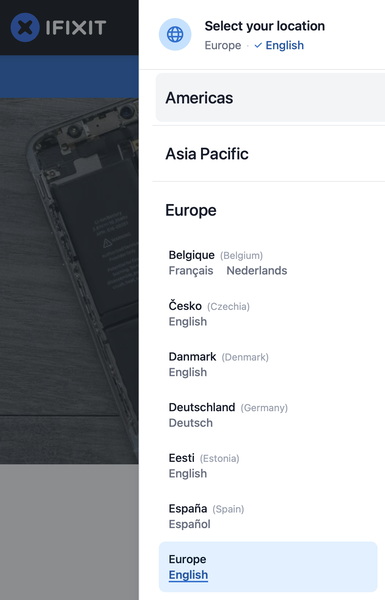
Use the language menu in the site header to choose the language you want to browse. You can change it from any iFixit page.
Repair guides and wikis can be created in any supported language, not just English. The language attached to a guide or wiki identifies its original language. Other language versions are translations of that source.
For years, our global community of volunteer translators has helped make thousands of repair guides and wikis accessible to people around the world.
iFixit is a wiki, which means community members can create, translate, and improve repair content directly on the platform.
New contributors' edits may enter the Patrol queue, where experienced community members review them before they become verified revisions.
Our repair library keeps growing, and we want people to find the information they need even when nobody has had the chance to translate it manually.
After all, if you can't find the fix, you can't fix the thing.
That's why we've introduced Translation Bot.
Translation Bot uses AI, along with iFixit's technical glossary and formatting rules, to generate draft translations of repair guides and wikis. This helps us make repair knowledge available in more languages, much faster.
Translations created by the bot are clearly attributed to it. You'll also see a notice on automatically translated content that hasn't yet been reviewed by a person.
These translations are useful starting points, but they aren't necessarily perfect. Technical terms, safety warnings, and repair instructions may still need attention.
That's where our community comes in.
Most of our repair content already has an initial translation. Our biggest challenge now is making sure those translations are accurate, understandable, and safe to follow.
If you're comfortable working in more than one language, you can help by reviewing automatically translated content, correcting mistakes, or improving technical terminology and readability.
You don't have to translate an entire guide to make a difference. Even fixing a single confusing instruction can help someone complete a repair successfully.
Ready to contribute?
Visit Translate iFixit to find guides and wikis that need attention.
For practical advice on reviewing translations, using AI responsibly, and maintaining translation quality, see our Translator Guidelines.
You can also help translate content that isn't yet available in your language, or contribute to the translation of iFixit's interface through Crowdin.
If iFixit doesn't offer the language you need, your browser may be able to translate the page automatically.
Browser translation is separate from iFixit's own language versions and may contain errors. Pay particular attention to safety warnings, measurements, directions, and technical terminology, and check critical instructions against the original before attempting a repair.
Have you spotted a translation mistake or have a question about contributing?
Get in touch with our translation team at translate@ifixit.com.
Together, we can make repair knowledge accessible, accurate, and useful in every language.


